

Which harness for which dog?
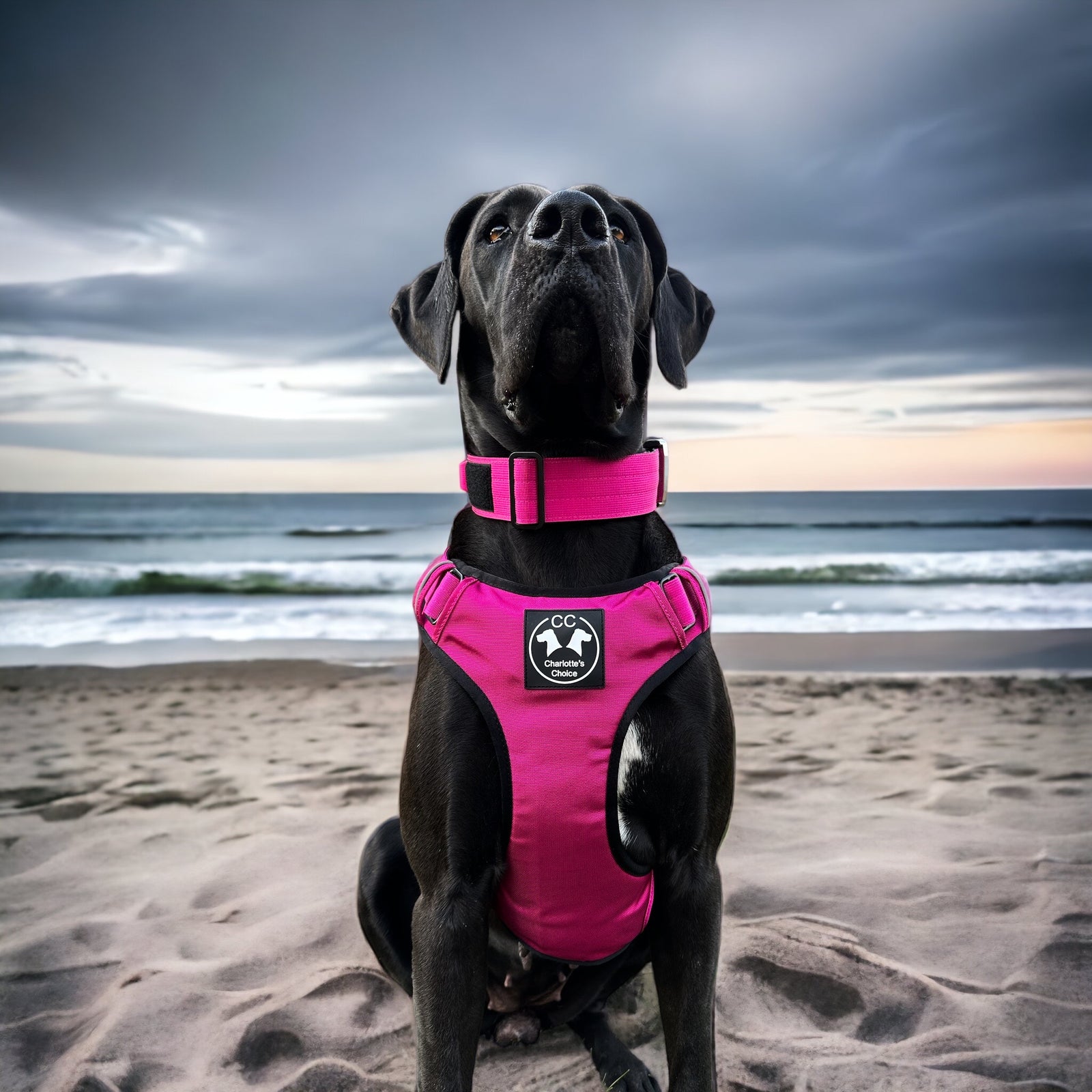
Your Guide to Dog Harnesses
As a dog owner (or soon-to-be dog owner!), you are likely aware of how important it is to find the right accessories for your companion. And when your dog has a high-quality harness, it will ensure that both of you have comfort and improve your safety and control.
But with so many different types, styles, and functions, it can be quite confusing to decide on the best one! And the answer ultimately depends on you and your dog.
In this guide, we will walk you through everything you need to know about dog harnesses to choose the perfect model for your dog's needs. Whether you are wondering how to properly measure your furry friend or want to better understand the differences between the various
What is a dog harness?
A dog harness is standard equipment that provides you with improved guidance and control over your dog. It is also known to give your dog a sense of comfort during walks, as the pull on the neck is reduced, especially when your dog pulls!
There are many different types, materials, styles, and designs of dog harnesses. In general, a dog harness with adjustable straps fits around your dog's torso, ensuring a perfect fit.
In addition to the above, there are various types of dog harnesses designed for specific purposes, each offering its own advantages. These include
Depending on the design of the
What is the purpose of a dog harness?
The primary purpose of a dog harness is to provide comfort and safety for your dog and you, without restricting freedom of movement.
A high-quality
A dog harness utilizes your dog's pulling force to give you more control without restricting their movement.It distributes the pressure evenly across your dog's shoulders, chest, back, and the entire upper body.
It is important to note that a dog harness must fit properly to be effective. Otherwise, your dog may wriggle out or the weight distribution would not be optimal. In our article, you will learn later how to measure your dog correctly for a

Collar or harness?
A dog harness offers improved comfort, better control, more guidance, and increased safety and support for your dog. It works by utilizing your dog's pulling force and distributing the pressure evenly across the body.
The benefits of a dog harness are:
Improved comfort: Even pressure distribution for comfort.
Better control: Easier handling of your dog's movements.
Easier handling for you: More control over your dog's pulling to avoid unexpected tugging.
Safety: Protection of the neck and even weight distribution across the body.
Support: Better attachment option during training, especially for puppies.
Diversity: Different types, styles, and sizes to choose from.
Additional features: z.B. Padded (upon request, we offer the option to pad the
A properly fitting dog harness is important to be effective and to prevent escaping or uneven weight distribution. Later, we will explain how to measure your dog correctly.
For very large dogs, however, the combination of collar and

How do I measure my dog for a harness?
Unfortunately, customers often misjudge the size of the
The most important measurement point is the chest circumference.Wrap the measuring tape around the widest part of the chest, directly behind the front legs up to the back. As if you were measuring your own chest circumference under the arms around to the back.
Then measure your dog's neck. Measure around the base of your dog's neck (where a collar would sit at the bottom of the neck up to the nape). Make sure your final measurements are not too restrictive, but secure. Compare your dog's measurements with the size chart of the

My dog pulls on the
Solution: Attach the
Do you want to train your dog's
By nature, a dog has the urge to respond to pull with counter-pull. So if you pull from the back, he will pull even harder. If the D-ring is at the chest, the pull is downward at the chest, and the dog usually pulls less or not at all.A chest attachment ring redirects the pulling force of the dog from front to back, which helps him focus on you and pull less. It is an effective method to support the training of

Your dog has good
Then you can attach the
It is best to choose the Comfo model, which offers your dog special comfort due to the wide chest area.

Your dog should pull actively in
For example, you want him to pull while jogging uphill or to pull you while inline skating or dog scootering? Then you attach the
Here again, the 3Point

